


Canonical and Monastic Traditions
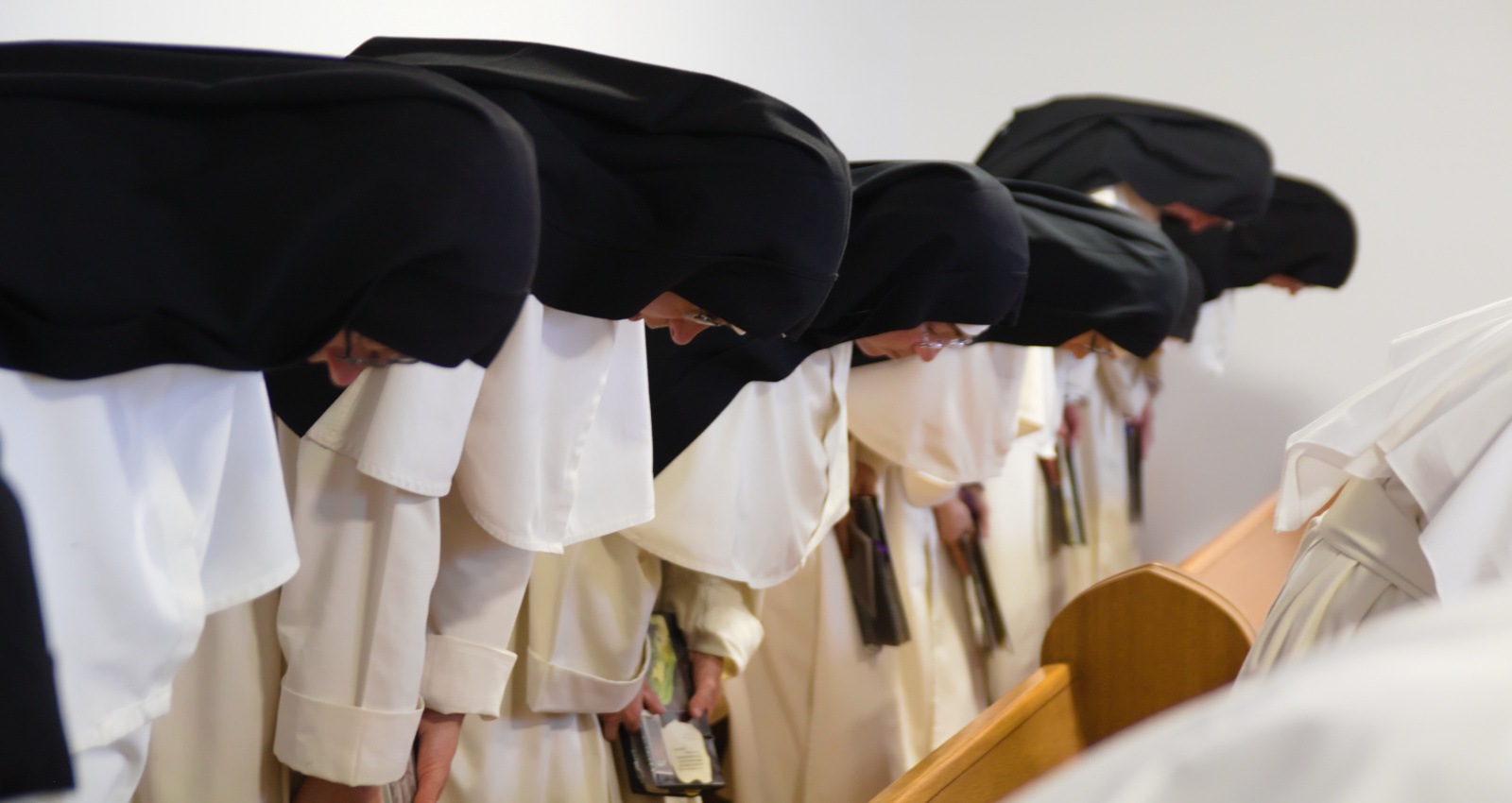
The spiritual power generated by God through the weak instruments of Norbertine Canonesses, the taking up of the tiny whispering sound of the Divine Office, chanted in a valley hidden from a world full of noise, the generous carrying out of manual labor, whether household chores or tasks on the farm, and the living out of age-old monastic customs and traditions all are parts of one harmonious action, together forming one sacrifice offered to God in love.
The Primacy of Charity
"Let us love God above all things, dearest sisters, then our neighbor, for these are the chief commandments given to us."(Prologue, Rule of St. Augustine)
 Our holy father St. Augustine made charity the primary observance of those who embrace the Apostolic way of life: “The chief motivation for your sharing life together is to live harmoniously in the house and to have one heart and one soul seeking God" (Rule, I.2). This charity, which is a gift of the Holy Spirit, was the soul of the first community of Christians gathered around the Apostles and it is the animating principle of the Vita Apostolica. This is why Norbertines, whose “raison d’etre is in a special way inspired by the life which the early Church led around the Apostles” (Constitutions 52), have as the distinctive character of our Order the love of God in the brethren and of the brethren in God. Norbertine communities offer in the Church a witness of unity in charity, i.e., of “a people made one in the unity of the Father, the Son and the Holy Spirit" (cf. Lumen gentium 4). This witness of generous mutual love, which is nourished and grows through the Eucharist, is a luminous and efficacious sign that God dwells among men.

Solemn and Reverential Celebration of the Sacred Liturgy
“I saw a very great multitude of white-robed men carrying silver crosses and candelabra and thuribles and they encircled this place singing as they went.”(Vision that led St. Norbert to choose Prémontré as the site of his new foundation)
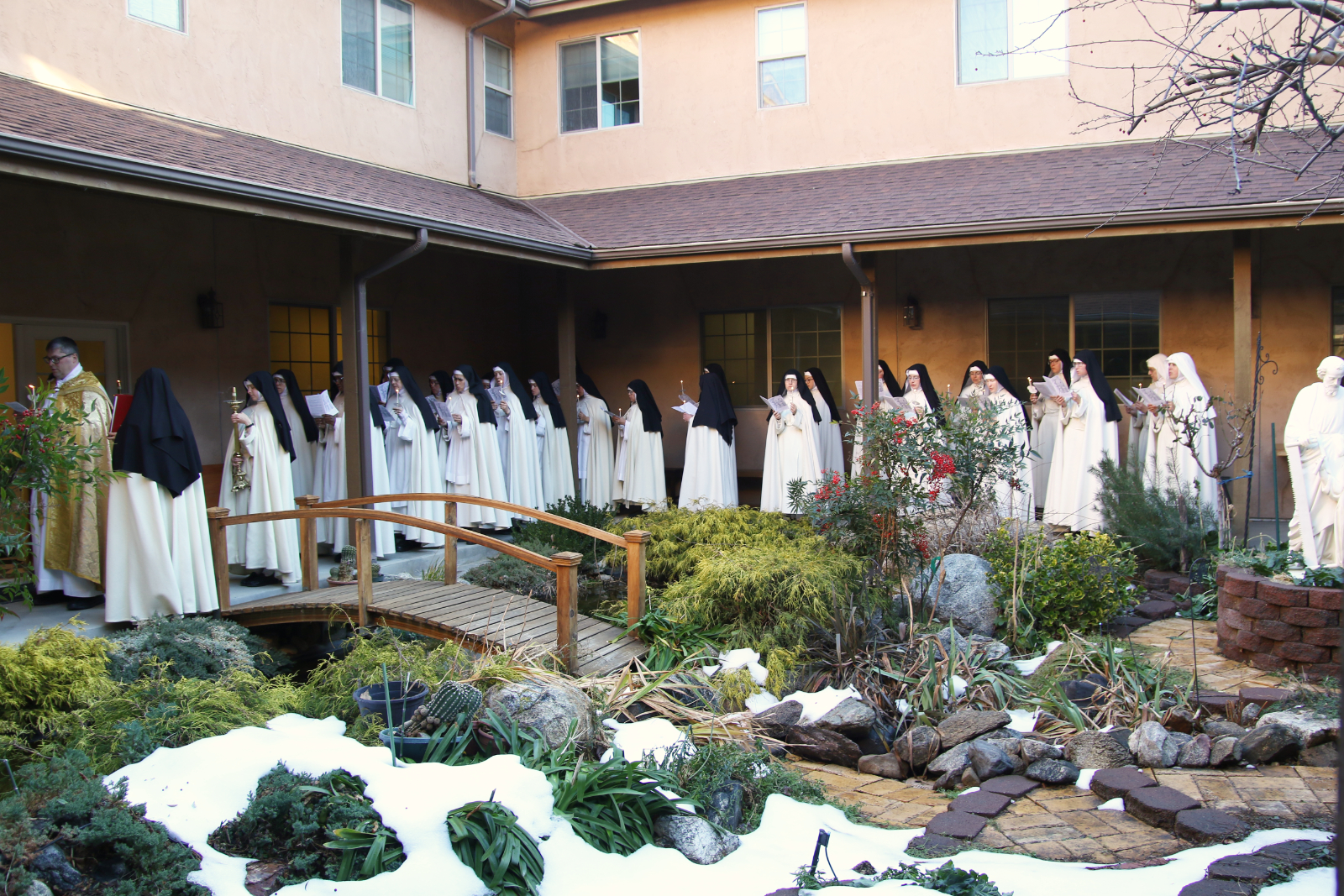 Our holy father St. Norbert had a great devotion to the celebration of the Holy Mass and of the Divine Office. He passed this on as a heritage to his sons and daughters, reminding us, "It is at the altar that we show our faith and our love for God.” Thus, from the very beginnings of our Order, liturgical prayer was not only celebrated with great reverence and solemnity, but it was embraced as the source of the Norbertine spirit. As the Church draws her life from the Eucharist, so too our communities, which by age-old tradition are called churches, draw their life and fruitfulness from the solemn celebration of the Church’s liturgical prayer. At her solemn profession, the Norbertine Canoness gives herself entirely to the service of the church of her profession for life. In receiving her vows, Holy Mother Church deputes her to the solemn and reverential celebration of the Liturgy. Thus, the structure of daily life for the Norbertine Canoness is centered around the liturgy; her existence flows in rhythm with the liturgical year.
Devotion to the Holy Eucharist
“Your Order is gloriously Eucharistic and Eucharistically glorious.”(Pope Pius XI to the Norbertine Order)
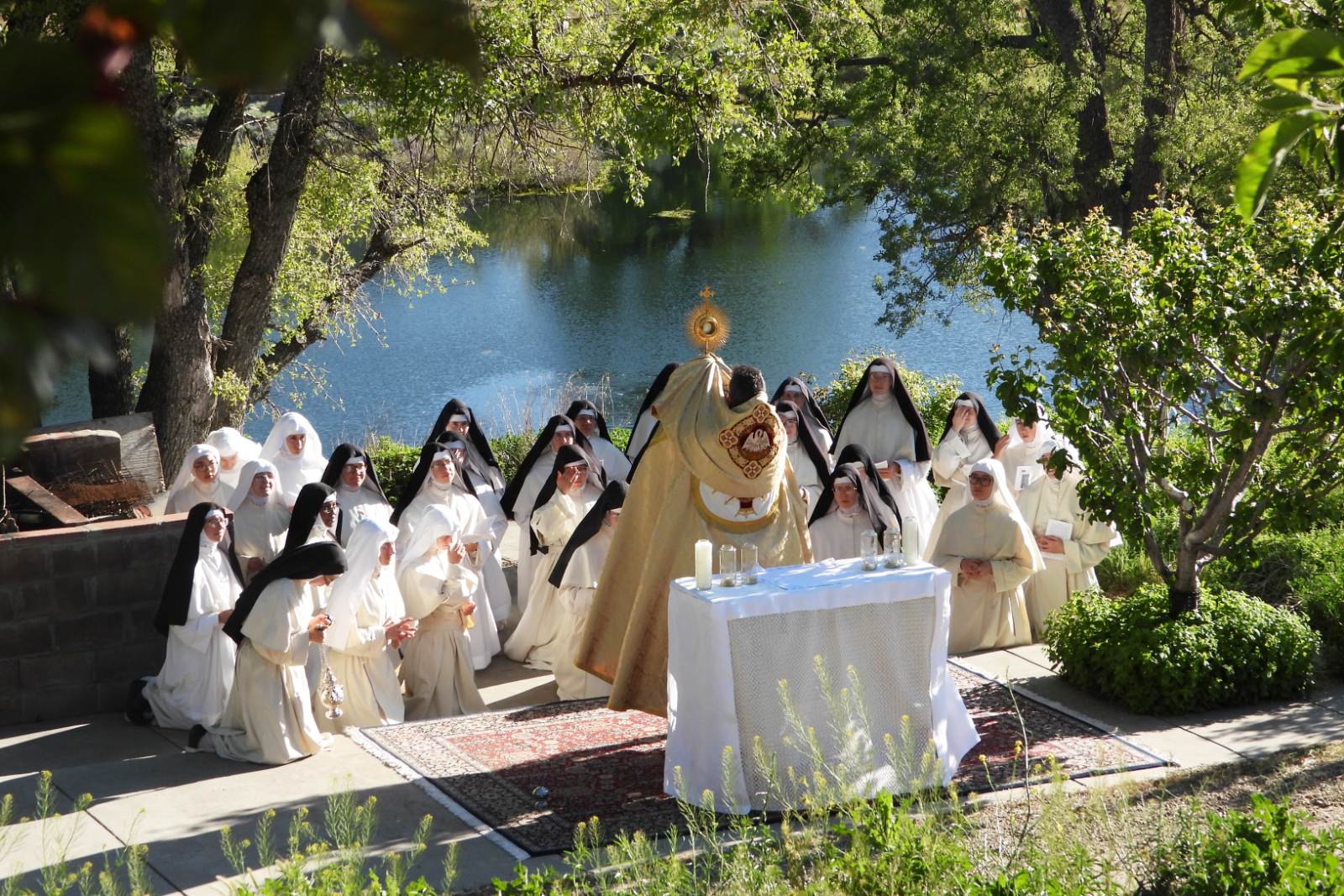
“The Eucharist, the heart of liturgical prayer, occupied such a place at Prémontré and in the life of St. Norbert that later traditions made Norbert the 'Apostle of the Eucharist'" (Bernard Ardura, O. Praem.). A distinguishing characteristic of the Norbertine way of life, our Eucharistic devotion is expressed first and foremost in the care and attention given to the daily celebration of the Holy Sacrifice of the Mass, and in the devout and frequent reception of Holy Communion. As we offer ourselves daily with Christ at the Offertory of the Mass, we recall the rite of our profession, knowing that in the Mass we become victims offered with Jesus, “hosts with the Host.” Just as it was for the Apostles and first Christians, the Eucharist is likewise the source of the ecclesial communio by which we are made one heart and mind (cf. Acts 4:32). At the Bethlehem Priory of St. Joseph, daily community adoration of the Blessed Sacrament is another treasured means of deepening our union with Christ in the Holy Eucharist and with one another in Him.
Devotion to the Mother of God
“All these with one accord devoted themselves to prayer together with the women and Mary the mother of Jesus.”(Acts 1:1)
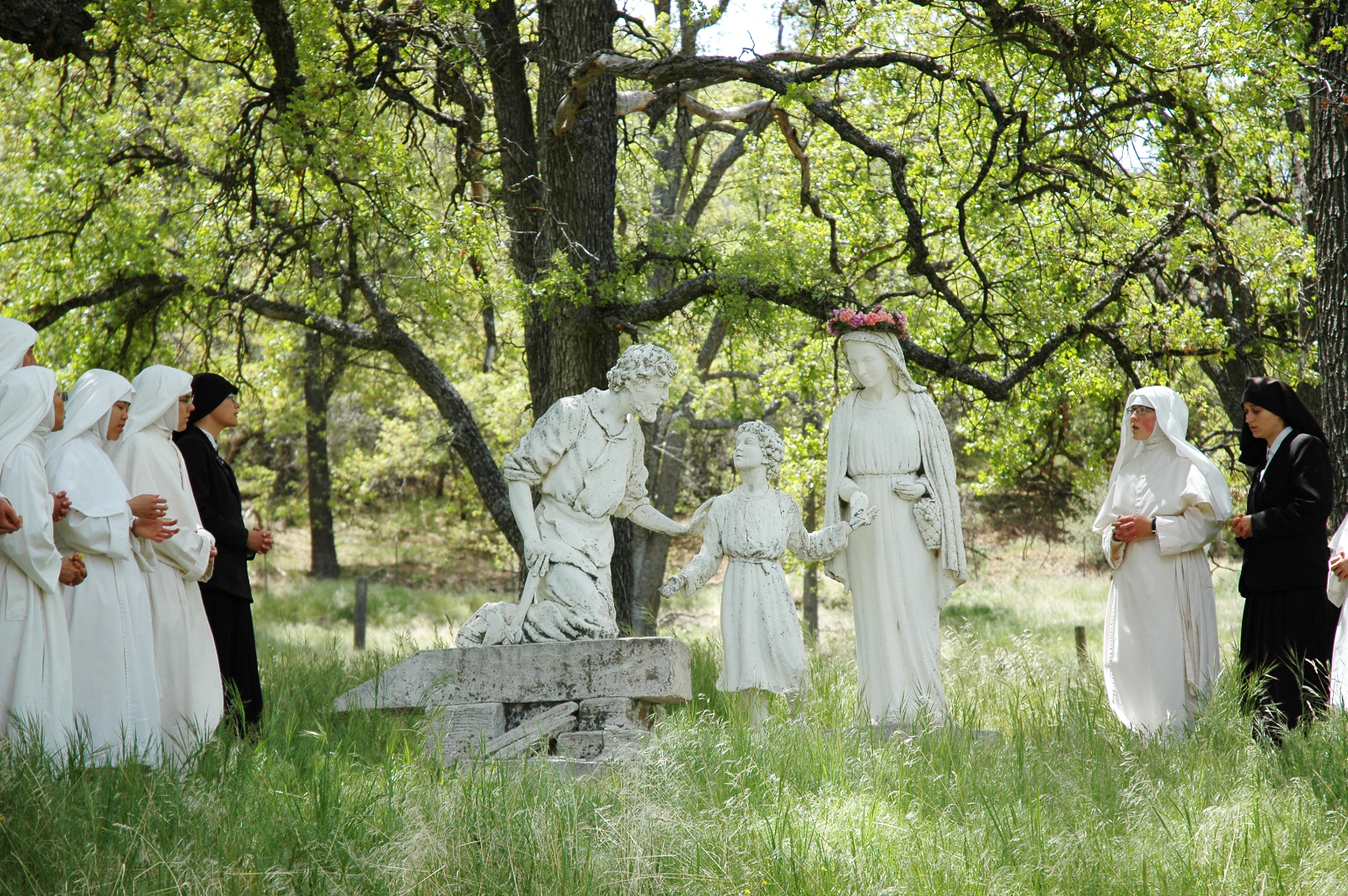
St. Norbert had a filial and tender devotion for our Blessed Mother. In this, he was following in the footsteps of the Apostles who, after the Ascension of our Lord, persevered with one mind in prayer together with Mary, the Mother of Jesus. St. Norbert faithfully celebrated Mass in honor of the Blessed Mother every Saturday, frequently invoked her intercession in his various ministries, and wished all the churches of his Order to be dedicated to her. Norbertines have continued the tradition of naming their churches in honor of the Blessed Virgin, and so vow to “offer and dedicate themselves” to the service of a church of which she is the patroness. Here at the Bethlehem Priory, we offer and dedicate ourselves to the service of the church of the Immaculate Virgin Mary and St. Joseph of Bethlehem. We each receive some form of "Mary" as a part of our religious name, and in addition to the daily community rosary, we renew together our consecration to our Blessed Mother each week after chanting the Litany of Loreto.
Lectio Divina
“When do we find Christ face to face if not when we push from our hearts all worldly tumult, so that nothing foreign interrupts our reading and nothing stands in the way of our meditation? Then we are absorbed into the pages of the sacred writings so that through the benefit of our reading we may know that Christ better whom our knowledge makes us love and whom our love then leads us fully to embrace.”(Philip of Harvengt)
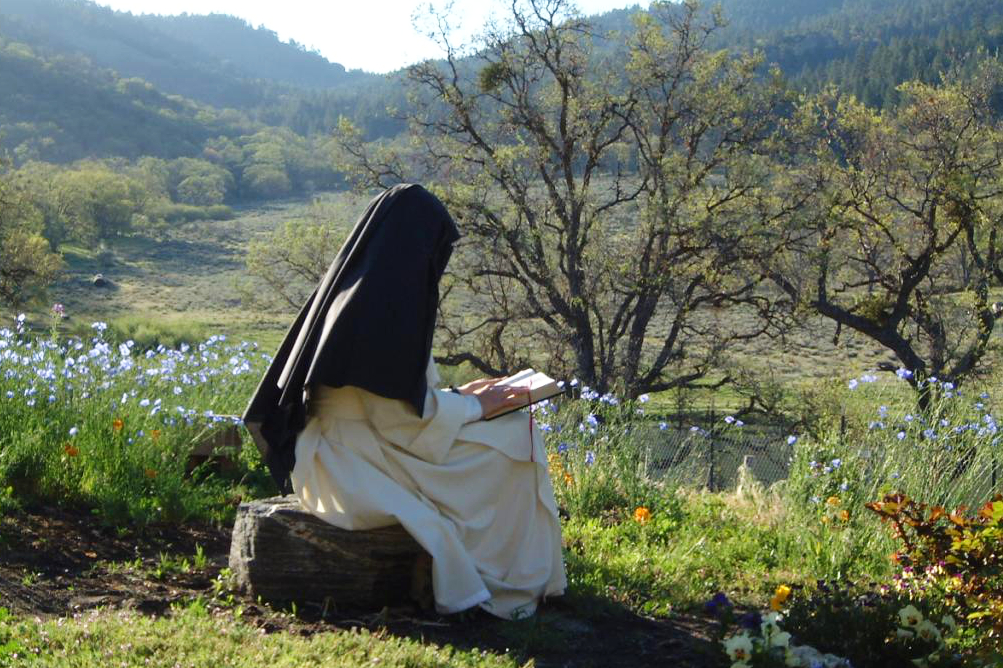
Immediately after his conversion, St. Norbert immersed himself in the study of the Holy Scriptures: “Gradually and slowly the interior sword of the Word of God, penetrating his depths and burning his loins and searching his heart, began interiorly to reform what had been deformed, plucking out and destroying, rebuilding and planting, casting out the serpent by the same way in which he had crept in” (Vita Norberti B, Ch. 7). A prayerful reading and assimilation of Sacred Scripture or texts from the Church Fathers, Lectio Divina slowly leads to a new way of seeing and acting according to the mind of Christ. At our priory, we spend the early morning between Lauds and Terce in the prayerful and contemplative reading of Sacred Scripture, which prepares us for union with Christ in the Holy Sacrifice of the Mass and in the various Hours of the Divine Office. This self-offering inspired by our time in Lectio continues throughout our day.
Penance
“The valley [of Prémontré] extends in the form of a cross with four arms.... This place, which looks so much like a cross, this valley that has been made cruciform, as it were, not by human effort but by the work of nature—what does it show, what does it foreshadow, if not that those who come there must no longer be concerned about living for the world, but must be configured to it, or rather to Christ, by a similar crucifixion?"(Philip of Harvengt, 12th-Century Norbertine Abbot)
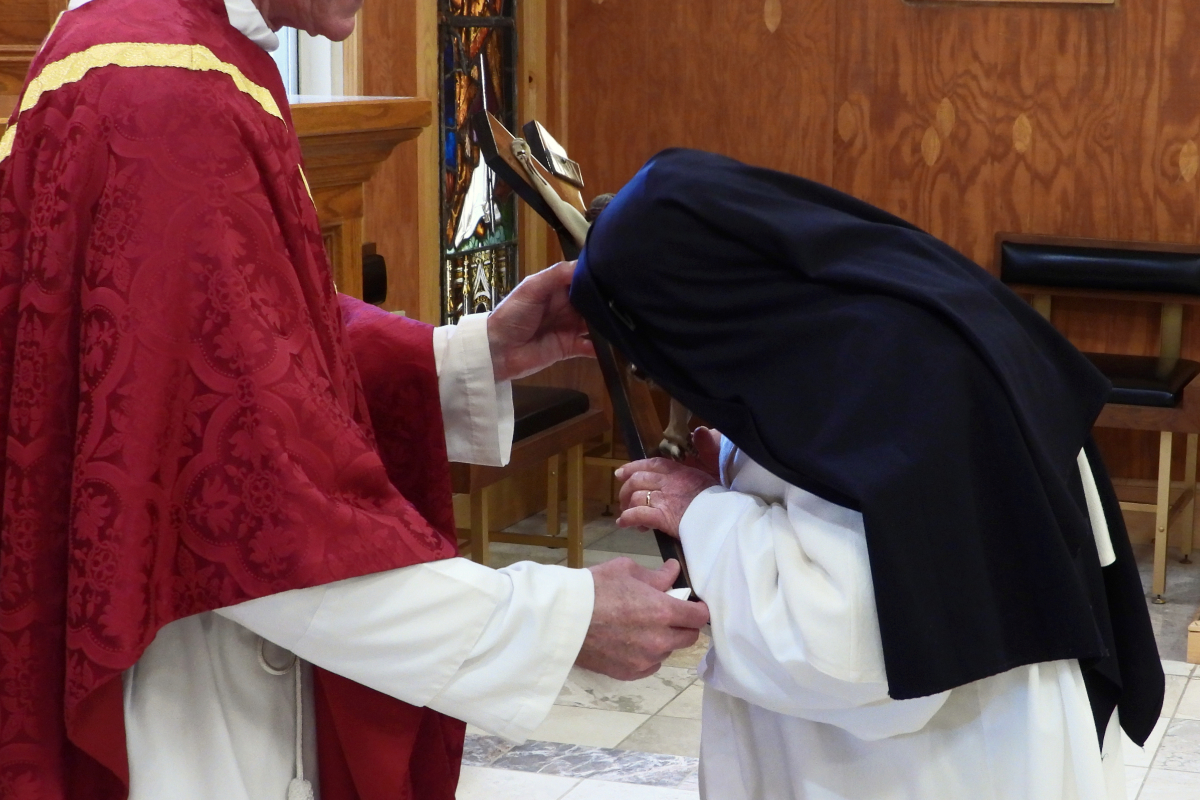
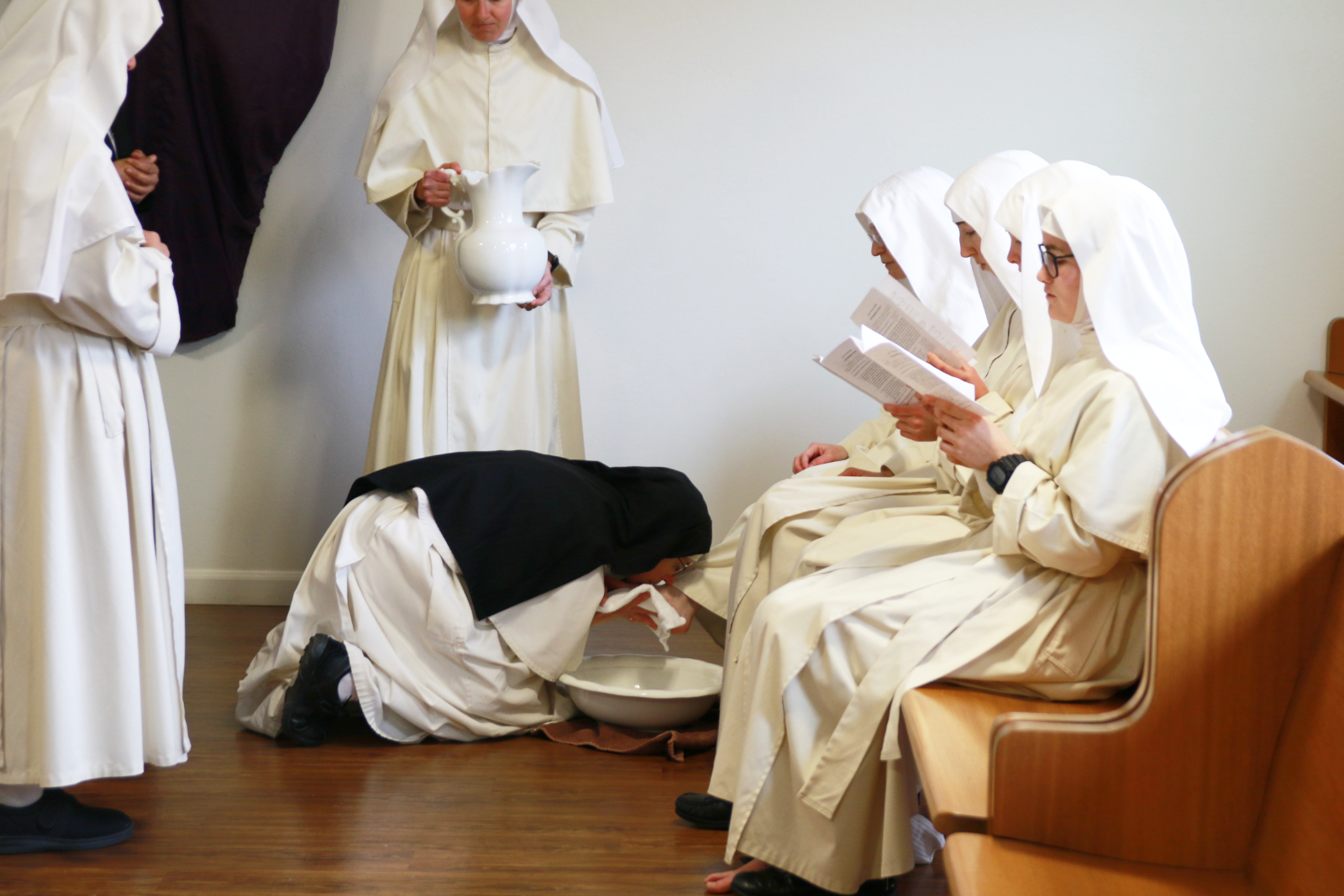
The first Norbertines were noted for their austerity of life, so much so that it came to be considered as one of the marks of the Order. This spirit of mortification, through which we die to the world in order to live for Christ, is inherent in our religious profession. Fasting and perpetual abstinence from meat, vigils, silence, and the cloister all form a part of the offering made to the Father through Jesus Christ in the Eucharistic Sacrifice. By the ancient monastic vow of conversion of ways, we commit ourselves to a daily Christian conversion of heart. This is why we embrace the monastic observances, which centuries of experience have shown are efficacious means of fostering this internal conversion. St. Norbert especially recommended the daily Chapter of Faults, promoting love of neighbor and forgiveness through an examen and correction of faults against charity and our common religious observance. Thus the quest for sanctity becomes a community venture, as we strive to become more and more “one heart and one mind on the way to God."
Spiritual Maternity
“And by whom, more than by the consecrated virgin, by her life of self-sacrifice to God alone, could be produced abundant fruits of salvation in souls? Is it not correct to speak here of a sort of spiritual maternity?”(A Spiritual Directory of the Order of Prémontré)
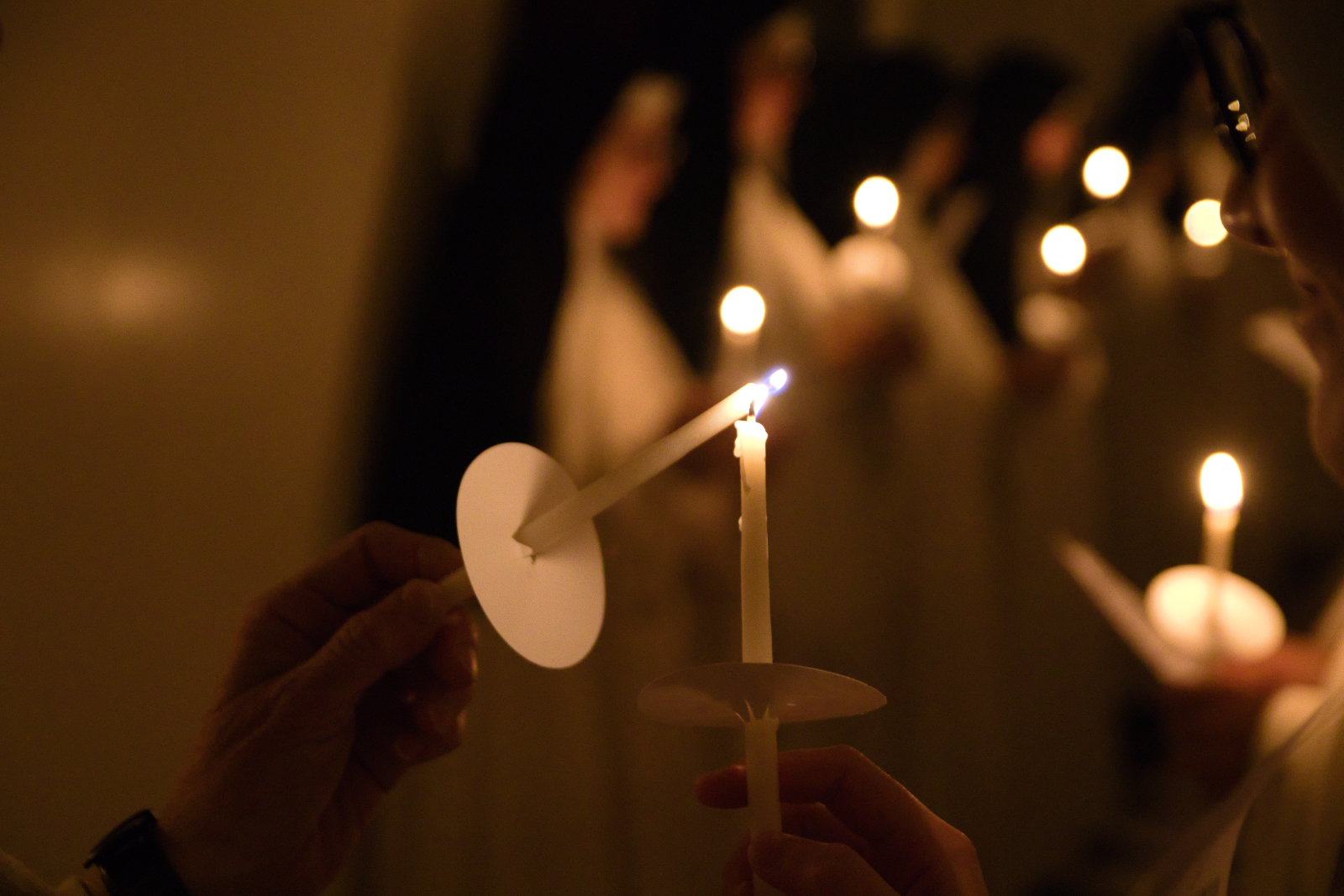
Well aware that the glory of God and the salvation of souls are inseparably linked, our holy father St. Norbert, so dedicated to divine worship and to the service of the Church, was likewise known for his apostolic zeal for bringing souls to God. Thus zeal for souls has always been a mark of our canonical Order. While the canons of the Order exercise an active priestly ministry in imitation of the Apostles, the canonesses, in imitation of Our Lady and the holy women in the Cenacle, “devote themselves more especially to the contemplative duty of our vocation ... with a truly apostolic spirit, which as canonesses regular is equally their own” (Constitutions, n. 20). As cloistered Norbertine canonesses, we live out this zeal for souls in a hidden way principally by sharing in the spiritual maternity of Our Lady and the Church through a liturgical and Eucharistic life, which radiates forth from the depths of the sanctuary. Like the Virgin Mary, united to Christ's own self-offering for the salvation of souls, we become intimately associated with His work of redemption.
Cloister
“Although they are known to be enclosed with such strictness and lowliness, including silence, nevertheless the power of Christ is working in an extraordinary way.”(Herman of Tournai, 12th-Century Benedictine Abbot, speaking of the early Norbertine women)
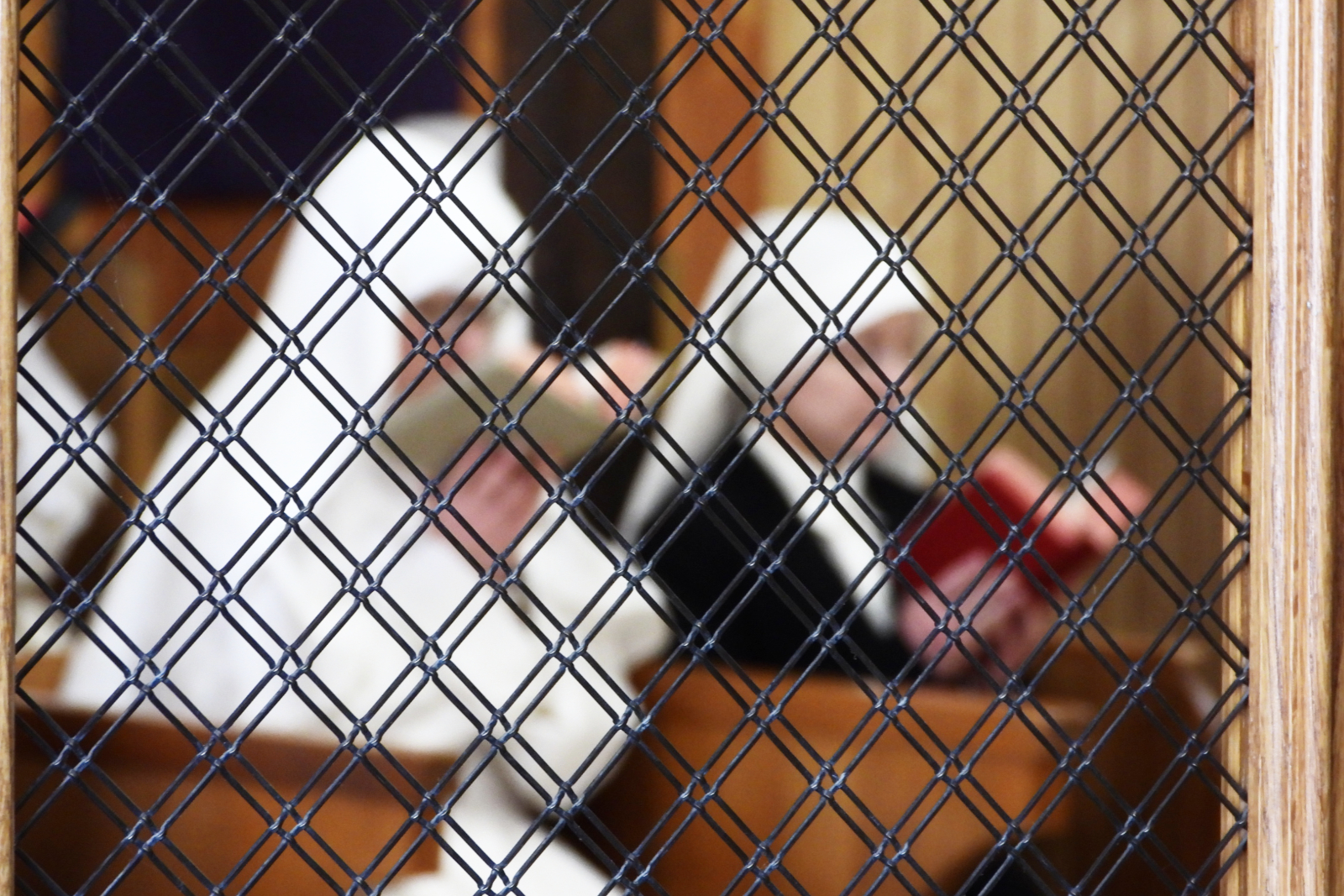
From the beginning, St. Norbert welcomed women into his community at Prémontré. Eventually, the original double monasteries, which had different sections for men and for women, were separated into individual monasteries of men and women at some distance from each other. The women then became canonesses in their own right, devoting themselves fully to the contemplative and liturgical dimension of our Norbertine vocation. Our practice of the cloister flows from our Order's traditional vow of stabilitas in loco, stability in place. By her consecration for divine worship in a specific church, the Norbertine canoness commits herself to spending her whole life within the walls of her monastery in continual prayer and penance. This contemplative dimension fits perfectly with the apostolic ideal of St. Norbert and gives it its fullness, for while the Apostles went out to preach to all nations, Our Lady and the holy women remained at prayer in the Cenacle, rendering the Apostles' preaching fruitful by their silence, prayer, penance, and communal life.
Hospitality
“And the house of God was enlarged to receive pilgrims who freely go on pilgrimage and hasten to the heavenly Jerusalem.”(Vita Norberti B, Ch. 21)
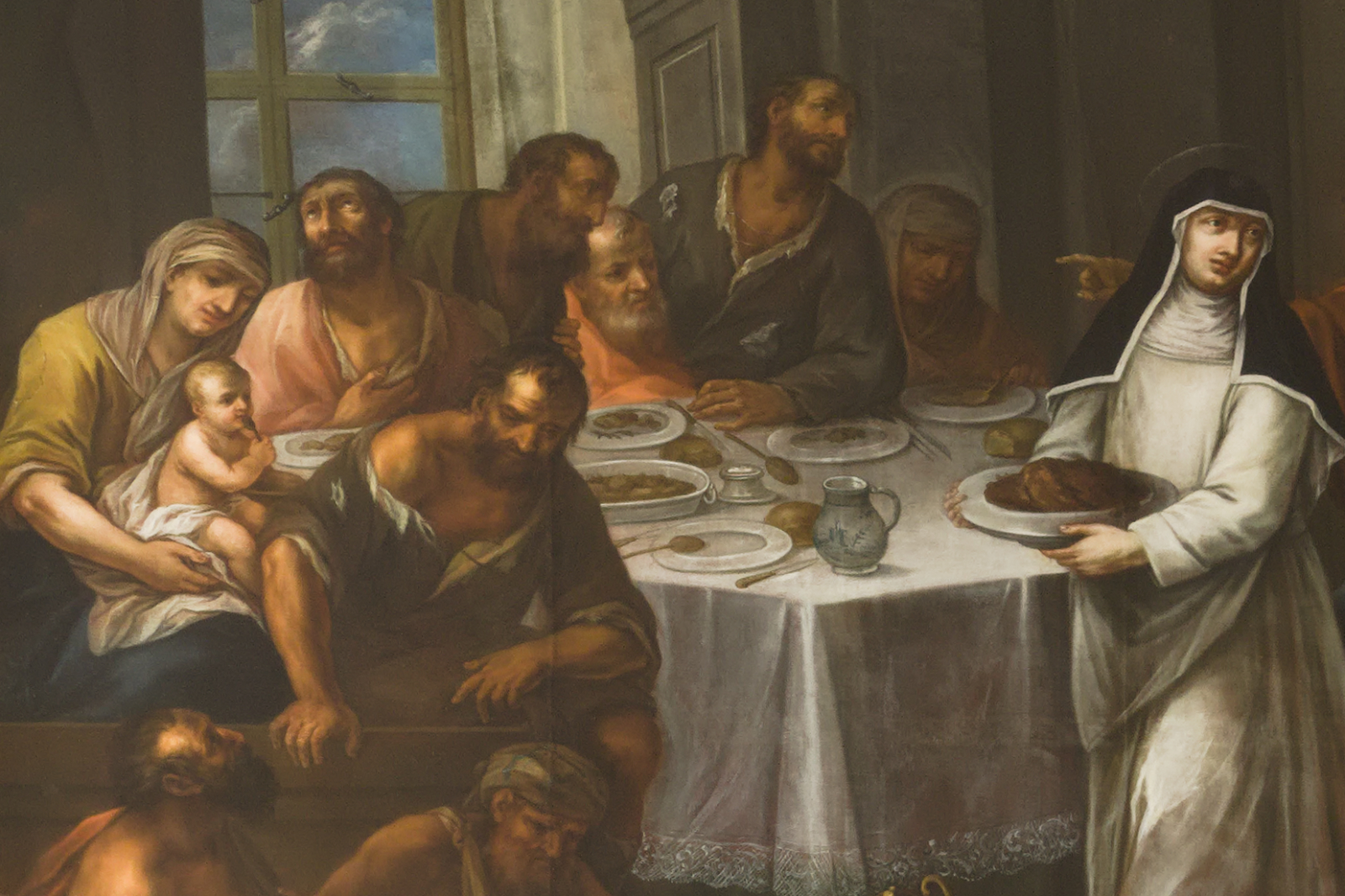
Our holy father St. Norbert firmly believed that the sharing of goods in charity, which is an essential dimension of the Vita Apostolica, must extend beyond the community to guests and to the poor. For this reason, St. Norbert built a hospice at Prémontré to provide for the poor and for pilgrims. This hospice was run by Blessed Ricvera of Clastres, the first woman he received into the Order. St. Norbert particularly loved this ministry of charity, and he recommended hospitality and care of the poor as one of the three things that should especially be practiced by the houses of his Order if they were to prosper. This mission of charity is continued today in the houses of the Order today both through various programs for providing for the poor and through guest houses for those visiting our abbeys and priories. Here at the Bethlehem Priory, our Bethany Guest House and St. Joseph Cabin provide places of retreat where people can come for rest, for spiritual refreshment, and to seek God in personal and liturgical prayer.
The White Habit
“One thing is certain, however, the angels who were witnesses of the Resurrection are said to have appeared in white and, by the authority and practice of the Church, penitents wear wool.”(Our Holy Father St. Norbert)
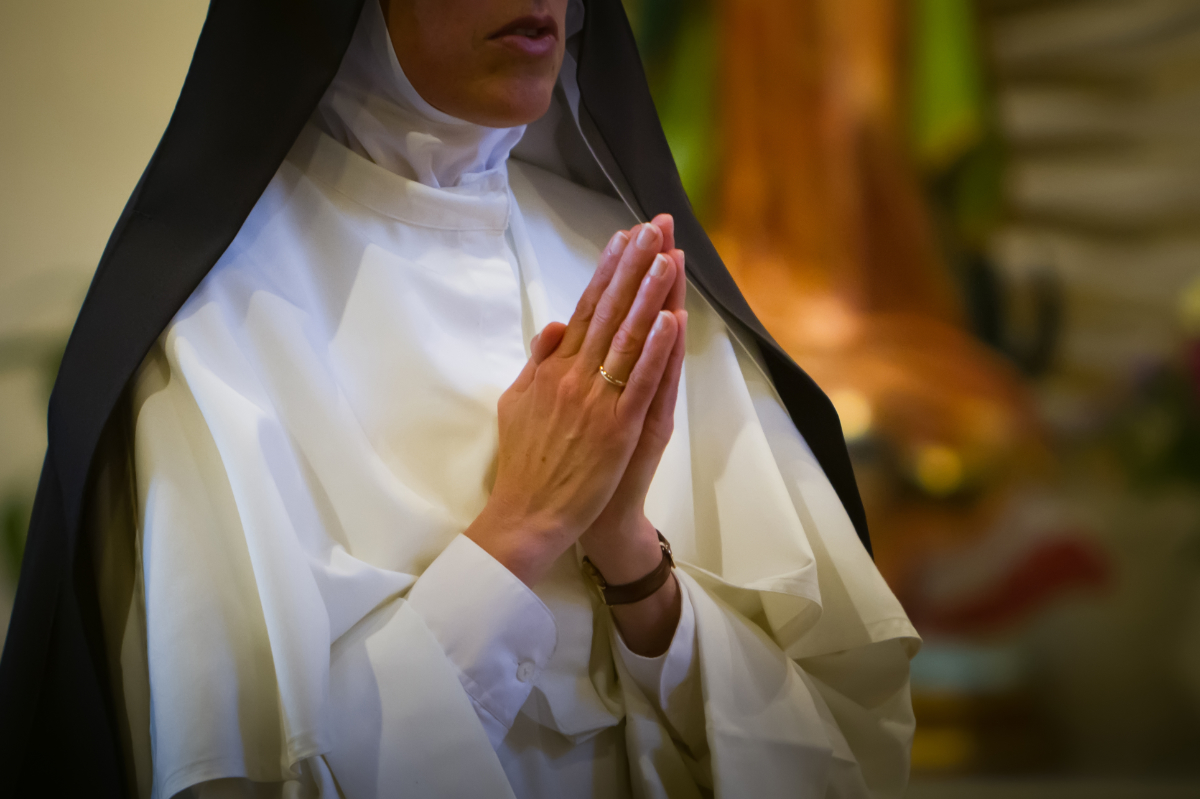
Before his conversion, St. Norbert wore sumptuous clothing corresponding to his wealth and rank. His choice of clothing reflected his interior preference for a worldly life in the imperial court over the life of holiness and divine worship befitting a cleric. True to this same principle, after receiving the grace of conversion, he deliberately changed his manner of dress and chose a garment of undyed wool to reflect “the plain and simple Christ,” showing to all who knew him that he was a changed man. St. Norbert himself explained the reason for the choice of a white garment, unlike the black customarily worn by other clerics and canons: he wished to become a true witness of the Resurrection of Christ, in imitation of the Apostles, and the Angels who announced the Resurrection were clothed in white. Over the centuries, Norbertines have reflected upon other aspects of our spirituality which the white habit also symbolizes, including devotion to the Mother of God, the white Host of the Eucharist, and the purity and newness of life our religious profession requires.
Devotion to the Souls in Purgatory
“Our union with [those] who sleep in the peace of Christ is by no means destroyed, but on the contrary, is strengthened by the communication of spiritual goods. Thus we devoutly recall the memory of the deceased before the Lord's altar and we pray on their behalf.”Constitutions, n. 88
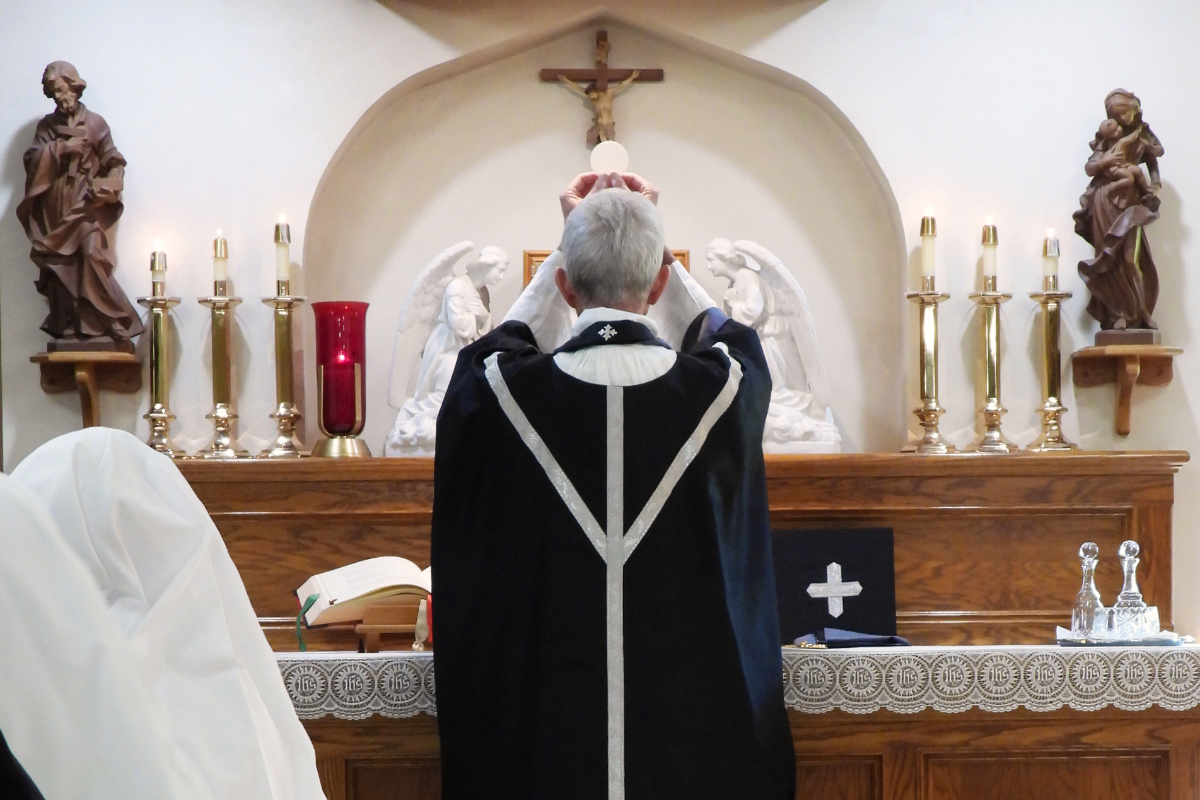
Among the early Norbertines, we see a constant current of fervent devotion to the souls in Purgatory and of abundant prayers for the dead, both in the frequent celebration of Requiem Masses and the Office of the Dead as well as in the examples of holy canons and canonesses. St. Frederick entered the Norbertine Order as an offering for the repose of the soul of his beloved mother. After offering her own sufferings for their release from Purgatory, Christine of Christ received visions of the souls for whom she had prayed ascending into Heaven, while many souls appeared to Maximiliana Zàsmuckà to beg for her prayers. This tradition remains enshrined in our Constitutions. Among other suffrages for the faithful departed, at Chapter we daily read the commemoration of the deceased in the Necrology, after which we chant Psalm 130, the De Profundis. Each hour of the Office concludes with invocations for the faithful departed, and on Wednesdays during Lent, we chant Vespers of the Dead immediately after the Vespers of the day.
Fidelity to the Pope and Magisterium
"Honorius, bishop, servant of the servants of God, to his beloved sons Norbert, brother in Christ, and the canons of the Church of Saint Mary of Prémontré, and to their successors who shall forever profess the regular life..."Pope Honorius II, in the bull Apostolicae disciplinae confirming the Order of Prémontré
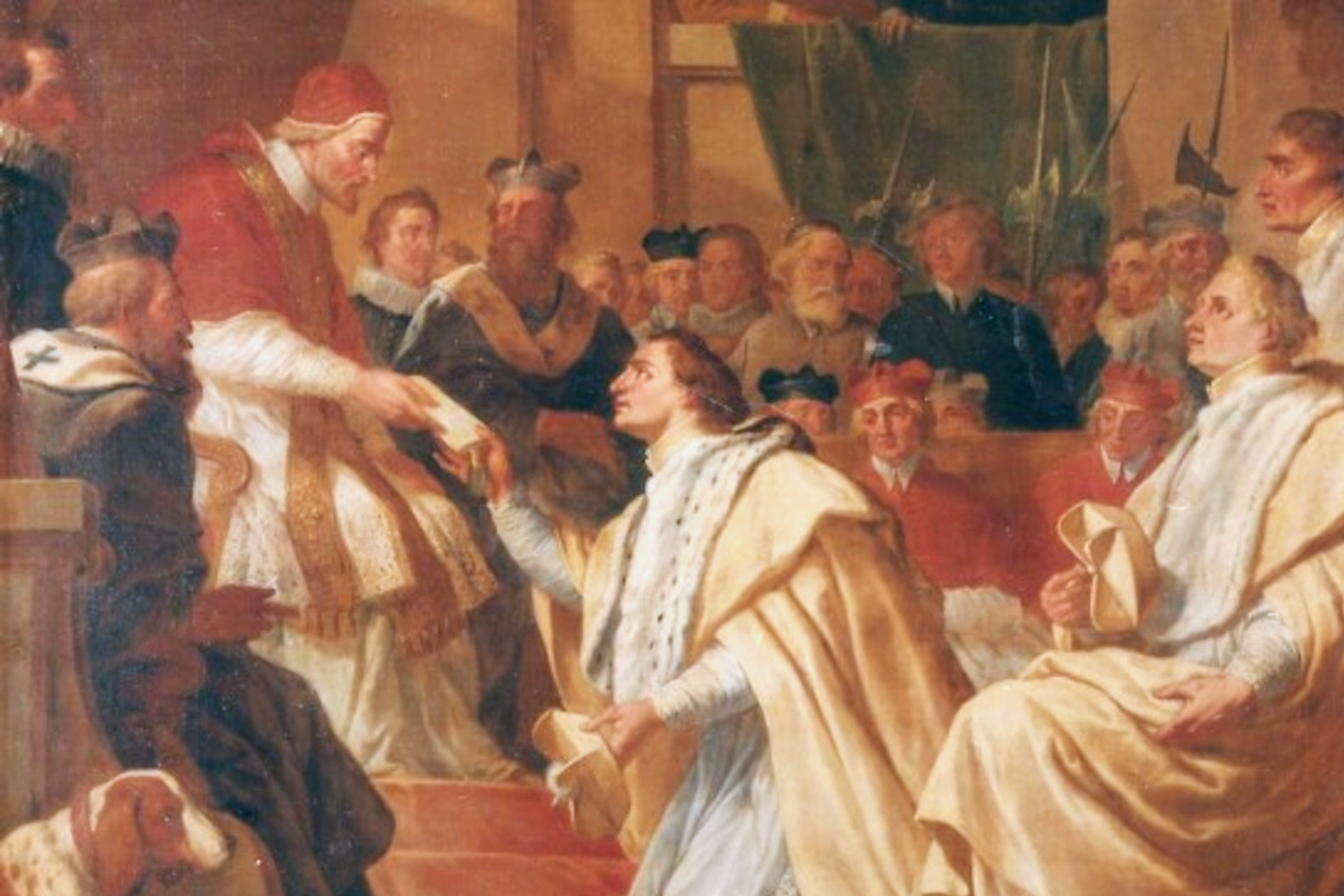
The life of St. Norbert was marked by a filial and uncompromising fidelity to the Holy Father and Magisterium. The first seeds of his conversion were planted when he witnessed the imprisonment of Pope Paschal II by the imperial forces and, although himself a chaplain in the emperor's court, personally went and begged the captive Holy Father's forgiveness for this outrage committed against him. Following his conversion, St. Norbert would always seek approval from the Popes of his day for his apostolic ministry, and he founded his community at Prémontré in response to the hierarchy's guidance. Finally, together with St. Bernard, he worked strenuously to uphold the true Pope against the anti-pope, promoting the peace and unity of the Church by uniting the faithful under one shepherd. As daughters of St. Norbert, Norbertine canonesses promote communio with God and his people through a filial fidelity to the Holy Father, Pope Leo XIV, to our Bishop of Fresno, Joseph Brennan, and the Magisterium.